Renowned leadership expert Dr. Kirstin Ferguson has shared a wealth of knowledge through her books, speeches, and interviews. Her core philosophy revolves around modern leadership that integrates both the head and the heart.
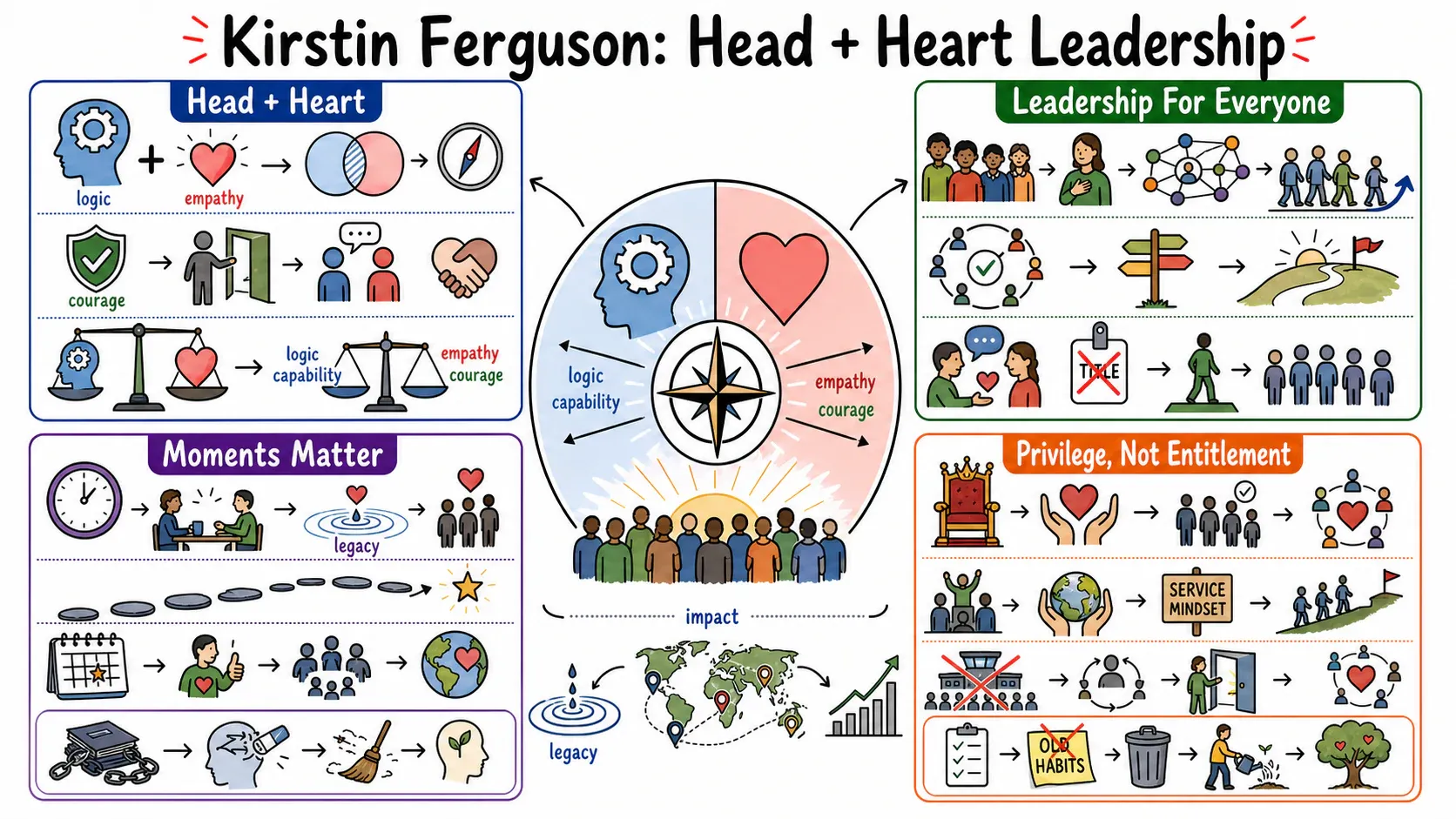
The Essence of Modern Leadership
At the heart of Ferguson's teachings is the concept of "Head and Heart Leadership," a framework designed for the complexities of the modern world. This approach emphasizes that true leadership is not about titles but about impact.
Key Learnings & Quotes:
- Leadership is for everyone. Ferguson consistently argues that you don't need a formal title to be a leader. Anyone who influences and impacts others through their words, actions, and behaviors is a leader. [1][2]
- Leadership is a series of moments. Every interaction presents an opportunity to lead, and these small moments collectively define your leadership legacy. [3][4]
- The goal of leadership is to leave a positive legacy. Good leadership is measured by the positive impact you have on people, whether in a single moment or over a lifetime. [2]
- Modern leaders are not infallible heroes. The expectation of leaders being all-knowing and flawless is an outdated concept from the "great man" theory of leadership. [3] Modern leaders understand their limitations and have the strength to be vulnerable. [5]
- Leadership is a privilege, not an entitlement. This mindset shifts the focus from authority to responsibility and service to others. [6][7]
- The art of modern leadership is balance. It's knowing when to employ head-based attributes (like logic and capability) and when to draw on heart-based skills (like empathy and courage). [7][8]
- Authenticity is key. Bringing your whole self to work and leading in an integrated way is not only less exhausting but also what people connect with. [9][10]
- Modern leadership has evolved. The command-and-control style is no longer effective. Today's leaders need to adapt to new realities and expectations. [3][8]
- We need to unlearn old leadership habits. Many have been rewarded for leading with their heads, but this alone is limiting. Organizations now seek leaders who can also lead with the heart. [7]
- Diversity is the outcome, inclusion is the strategy. Ferguson stresses that not enough focus has been placed on inclusion, which requires leaders and cultures to change to reap the benefits of a diverse workforce. [11]
Leading with the Head: The Four Attributes
Leading with the head involves the more tangible, analytical aspects of leadership. Ferguson identifies four key attributes in this domain.
Key Learnings & Quotes:
- Curiosity: This is about having a thirst for learning what you don't know and rethinking what you think you understand. [5] It's about asking open questions and being genuinely interested in finding things out. [10]
- Curiosity and humility are linked. Research shows that these two attributes are highly correlated. If you're curious, you understand you don't have all the answers. [10]
- Wisdom: This involves more than just knowledge; it's about insightful decision-making, weighing risks and rewards, and navigating the best path forward. [5]
- Perspective: A crucial and often undervalued skill, perspective is the ability to "read the room," understand the context, and notice who is not speaking up. [3][5]
- Capability: This is not just about your own skills but also about bringing out the best in others, much like a conductor with an orchestra. [5][6]
- Self-efficacy is part of capability. Believing that you are capable is as important as being capable. [6]
Leading with the Heart: The Four Attributes
Leading with the heart encompasses the emotional and relational aspects of leadership, which are critical for building trust and psychological safety.
Key Learnings & Quotes:
- Humility: It's about accepting your own limits and being open to the contributions and ideas of others. [5] Humble leaders know they don't have all the answers. [12]
- We are often poor judges of our own humility. Research indicates that those who score high on self-assessed humility may be scored lower by those they lead. [12]
- Self-awareness: This is having insight into your own character, motivations, and biases, and understanding how you impact others. [5]
- If you're not receiving feedback, ask yourself why. People on your team will have opinions about your leadership, and it's on the leader to create a culture where it's safe to share them. [13]
- Courage: This isn't just about grand gestures. It includes everyday acts like taking on a promotion you don't feel ready for or giving and receiving meaningful feedback. [13]
- Empathy: It's the ability to understand and value the feelings and different experiences of others to achieve better outcomes. [5][11]
- Empathy is a bottom-line value. As demonstrated by companies like Microsoft, leading with empathy can lead to better profits, a stronger brand, and a healthier culture. [2]
- Leading with the heart is hard work. Being vulnerable, self-aware, and humble becomes more challenging with seniority. [2]
Practical Learnings for Leaders
Ferguson's work is filled with actionable advice for leaders at all levels.
Key Learnings & Quotes:
- Everyone has blind spots. A key leadership technique is "blindspotting"—recognizing what you don't know and not being afraid to admit it. [14]
- Be Honest. Be Curious. Be Flexible. These are the three mindsets of "blindspotting" to help uncover hidden gaps in thinking. [15]
- Rectify missed moments. If you realize you've missed an opportunity to thank someone or acknowledge their effort, go back and fix it. Accepting that you're fallible is half the battle. [13]
- Create psychological safety. If people are scared to be curious or to challenge the status quo, they will never speak up. [13]
- Listen to every generation. Understanding the different perspectives and needs of all generations in the workforce is crucial for effective leadership. [10]
- Don't mistake silence for agreement. A leader might assume their team is silent because they are brilliant, when in reality, the team may not feel safe to contribute. [13]
- Leadership is not a scarcity competition. Everyone wins when we all lead well. [1]
- Seek out diverse points of view. Empathy in modern leadership means deliberately looking for different lived experiences to inform your decisions, especially in remote teams. [1]
- Integrate your leadership. The skills you use at home, like empathy and curiosity with your children, are the same skills needed in the workplace. [8][10]
- Focus on your words, choices, and behaviors. These are the tools through which we all lead and impact others. [2]
- You win in the small engagements. The one-on-one conversations and small moments are where leadership has the most significant impact. [13]
- Develop other leaders. A key responsibility of a modern leader is to see their role as building a "family tree of leaders." [4]
- A modern leader has an internal locus of control. They are not victims of their circumstances and look inward for responsibility. [6][12]
- The ability to learn, unlearn, and pivot is invaluable. In a rapidly changing world, this adaptability is more important than having all the answers. [15][16]
- Embrace intellectual humility. This is the willingness to acknowledge the limits of your own knowledge. [16]
- Don't let jargon get in the way. Ferguson addresses common workplace issues, including the overuse of corporate-speak, which can hinder clear communication. [17]
- Leadership requires navigating complexity with humility. We need leaders who are "humbled by the sheer complexity of the issues they need to resolve." [5]
- You don't need a golden ticket to lead. Opportunities and challenges to lead are all around us, and we don't have to wait for an invitation. [5]
- Your purpose is shaped by all your experiences. Both good and bad experiences contribute to your leadership journey and purpose. [11]
- Focus less on intellect and more on emotional intelligence. This is how leaders can make a real difference in the world. [11]
- It's okay to admit you don't have all the answers. This is a sign of a modern, authentic leader. [18]
- Leadership is not about being the smartest person in the room. This mindset robs others of the opportunity to learn and contribute. [3]
- Pay attention to who is missing from the room. And if they are in the room but not speaking, a leader must notice that as well. [3]
- Feedback is a gift. Modern leaders actively seek it out to avoid the blind spots that come with assuming silence is agreement. [13]
- Everyday acts of courage matter. Standing up for what you believe in, even when it's uncomfortable, is a hallmark of heart-based leadership. [13]
- The words-to-wisdom ratio. A concept Ferguson coined for herself, suggesting the importance of thoughtful contribution over just talking. [6]
Learn more:
- Leadership Is Simply A Series Of Moments: Kirstin Ferguson - Forbes India
- Kirstin Ferguson on the Importance on Leading With Empathy - Qantas
- The Art of Modern Leadership with Kirstin Ferguson - YouTube
- The Art of Modern Leadership - Dr Kirstin Ferguson
- Book Review: Head & Heart: The Art of Modern Leadership, by Kirstin Ferguson
- The Art of Modern Leadership: Balancing Head and Heart with Dr Kirstin Ferguson AM
- Why you should cultivate head and heart-based leadership - Dr Kirstin Ferguson
- Why OHS needs to lead with both the head & the heart - Dr Kirstin Ferguson
- Head and Heart Leadership with Kirstin Ferguson
- What Makes a Good Modern Leader, With Kristin Ferguson - YouTube
- Dr Kirstin Ferguson reveals the one trait all great leaders possess - The CEO Magazine
- The Art Of Modern Leadership: Balancing Head And Heart with Dr Kirstin Ferguson AM
- The Art of Modern Leadership with Dr. Kirstin Ferguson | The ONE Thing 425 - YouTube
- Dr Kirstin Ferguson on blindspotting and why it matters - YouTube
- Dr Kirstin Ferguson - Platinum Speakers
- Keynotes & Workshops | Leadership Expert - Dr Kirstin Ferguson
- Workplace culture - Dr Kirstin Ferguson
- 093: Head and Heart Leadership with Dr Kirstin Ferguson - Speaking Savvy