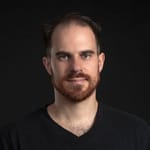
Tony Xu, the co-founder and CEO of DoorDash, has transformed a Stanford GSB project into a cornerstone of the modern local economy through a blend of immigrant grit and operational precision. His leadership philosophy centers on a relentless focus on the "lowest level of detail," balancing long-term visionary thinking with the practical, messy realities of physical-world logistics. The following insights detail his journey from washing dishes in his mother’s restaurant to building the infrastructure for local commerce.
Part 1: The Immigrant Experience and Resilience
- On the American Dream: "I think that it's impossible to predict how things go for you... it's only one that can be told backwards. It's not one that when I was... mowing lawns... or washing dishes in my mom's restaurant could I have predicted what would have happened later on." — Source: Norges Bank "In Good Company"
- On Early Hardship: "My dad was getting his graduate degree and my mom, as a way to put food on the table, worked three jobs a day for about 12 years. All of those jobs happened to be inside local businesses." — Source: Series A with Keith Rabois
- On Identity as an Outsider: "Frequently changing schools made me appreciate feeling like what it meant to be the outsider... it fostered the practice at a very young age for independent thinking." — Source: Norges Bank "In Good Company"
- On Parental Influence: "My parents' work ethic and the importance of resilience have significantly influenced my operating mentality today." — Source: 20VC Podcast
- On the Definition of Success: "An 'American story' is one where you start with very little and build something that hopefully empowers others to do the same." — Source: Norges Bank "In Good Company"
- On Dishwashing Lessons: "I moonlighted at times as a dishwasher in a local Chinese restaurant. That’s where the fascination with local businesses really began." — Source: Kinetic Energy Ventures
- On Early Labor: "Mowing lawns and washing dishes weren't just jobs; they were lessons in the fundamental mechanics of how a business survives." — Source: Norges Bank "In Good Company"
- On Adapting to Change: "Immigrating from China and frequently relocating instilled the crucial skill of adapting to new environments, which is vital for any entrepreneur." — Source: Stanford GSB View From The Top
- On Economic Necessity: "When you grow up with the pressure of solvency at a personal level, you never take capital or growth for granted once you start a company." — Source: Sequoia Capital Crucible Moments
Part 2: First Principles and Finding Product-Market Fit
- On Identifying the Problem: "The initial idea really came when we visited a macaroon store owner. We asked: 'Can we follow you around for a day?'" — Source: Y Combinator
- On Unmet Demand: "It was toward the end of the day that the store manager showed us a booklet of orders she had turned down. All of them were delivery orders." — Source: Y Combinator
- On the "FedEx for Locals" Pitch: "For the four of us, when we were starting DoorDash, we always had the same vision, which was to build the 'FedEx of locals.'" — Source: Sequoia Capital Crucible Moments
- On Being an Underdog: "DoorDash was not the fan favorite at the YC Demo Day in 2013. There were a lot of skeptics around whether delivery could ever be economical." — Source: Sequoia Capital Crucible Moments
- On Business School Roots: "We identified the problem of inefficient food delivery and built DoorDash from a business school project in 2013." — Source: How I Built This with Guy Raz
- On Testing Hypotheses: "Identify the most fundamental problem you are trying to solve. This approach helps in quickly testing and validating ideas before over-building." — Source: Stanford GSB View From The Top
- On Early Skepticism: "As the entrepreneur, you certainly need conviction, but you also need evidence along the way to make sure that you're not delusional." — Source: Sequoia Capital Crucible Moments
- On Breaking Down Problems: "The best way to solve a complex problem is to break it into its smallest, most detailed pieces." — Source: Apple Podcasts - Tony Xu
- On the Origin of Food Focus: "The truth is, we didn't start with the idea of food delivery. We started with the idea to help every brick-and-mortar business." — Source: Kinetic Energy Ventures
Part 3: Operational Detail and the "We Dash" Culture
- On Becoming an Expert: "There's no better way to be the expert than just to do the work. You might be surprised at how quickly you get to become the expert." — Source: Sequoia Capital Crucible Moments
- On the Messiness of Reality: "You're not just writing software. The software does interact with the physical world; the physical world is messy." — Source: Stanford GSB View From The Top
- On Hands-On Insight: "Nearly all employees, including myself, perform deliveries regularly. This helps in identifying problems from the perspective of Dashers." — Source: The Information
- On the Lowest Level of Detail: "Success in logistics is found in the lowest level of detail. You have to understand exactly what happens at the restaurant counter and the customer’s door." — Source: Stanford GSB View From The Top
- On Truth-Seeking via Delivery: "Our core value of 'truth-seeking' involves a hands-on approach where we engage in customer service to gain direct insights rather than solely relying on data." — Source: DoorDash Culture Video
- On Execution vs. Ideas: "Execution and adaptability are far more critical than initial ideas. The idea only gets you to the starting line." — Source: Medium - Tony Xu Insights
- On Prioritizing Dashers: "Early on, we prioritized making Dashers successful, understanding that they were the most crucial part of building a complex logistics system." — Source: Medium - Tony Xu Insights
- On Software in the Real World: "Software alone doesn't deliver food. It's the orchestration of people, vehicles, and timing that creates the value." — Source: Stanford GSB View From The Top
- On Personal Accountability: "If you aren't willing to do the delivery yourself, you don't deserve to build the platform for those who do." — Source: Stanford GSB View From The Top
- On Operational Obsession: "Obsession with detail is what allows you to find the bottlenecks that a dashboard will never show you." — Source: Stanford GSB View From The Top
Part 4: Strategic Selection and the Power of the Suburbs
- On Avoiding Incumbents: "You can't compete against an incumbent on their territory. You're going to lose. You have to find something where they're not incentivized to do it." — Source: Khosla Ventures
- On Suburban Advantage: "For us, it always made more sense to deliver outside of city centers. San Francisco is maybe 5% of the population; everyone else lives outside." — Source: Series A with Keith Rabois
- On Innovator’s Dilemma: "Some incumbents never wanted to touch end-to-end delivery because it is lower margin than just being a software marketplace." — Source: Series A with Keith Rabois
- On Startup Speed: "You have to be super fast as a startup. Focus is easier when you only have one product and one goal." — Source: Khosla Ventures
- On End-to-End Control: "Knowing where the market is and knowing structurally why it's difficult for a competitor to serve that market is the only way to win." — Source: Series A with Keith Rabois
- On Hyper-Local Competition: "The industry is very hyper-local. Success in one market doesn't automatically translate to another; you have to listen to customers in every specific city." — Source: Norges Bank "In Good Company"
- On Market Selection: "We didn't go where the competition was loudest; we went where the logistics were hardest but the families were actually living." — Source: Series A with Keith Rabois
- On Building Infrastructure: "We want to be the infrastructure in the physical world for every city we operate in, connecting every local merchant with every local consumer." — Source: Happy Scribe Transcript
- On Strategic Stubbornness: "Be quite stubborn on the vision and strong-opinionated about what you want to do, even if the incumbents mock it." — Source: Norges Bank "In Good Company"
Part 5: Customer Obsession and the Local Economy
- On Consumer Satisfaction: "One of the things that I've learned is that consumers are never satisfied... they are just going to expect us to deliver faster tomorrow." — Source: Norges Bank "In Good Company"
- On Economic Impact: "We're here to build a company that will grow and empower every physical business and grow the GDP of every city." — Source: Sequoia Capital Crucible Moments
- On the Underdog Inspiration: "My early experiences fueled a fascination with seeing the inspiration of the underdog in physical businesses." — Source: Norges Bank "In Good Company"
- On Consumer Loyalty: "No consumer is going to ever ask us to increase our prices or lower our selection. We must work backward from that truth." — Source: Norges Bank "In Good Company"
- On Pandemic Responsibility: "During COVID, we focused on delivering essential services to vulnerable populations and providing marketing support to struggling restaurants." — Source: How I Built This with Guy Raz
- On Voluntary Partnership: "We believe in voluntary actions over government mandates because mandates often have unintended negative consequences for the very businesses they try to help." — Source: How I Built This with Guy Raz
- On Helping Small Business: "Building more products for local merchants than anyone else has really been what has allowed us to be the best partner for them." — Source: Norges Bank "In Good Company"
- On Marketplace Volume: "Online meal delivery still represents a single-digit percentage of the total restaurant business; the opportunity for growth is massive." — Source: The Information
- On Driver Flexibility: "80% of Dashers have jobs already. On average they are working three hours or fewer per week. It is the part-time opportunity of the century." — Source: Kinetic Energy Ventures
Part 6: Leadership, Responsibility, and Talent
- On Accountability: "Great leaders give all of the credit and take all of the blame." — Source: 20VC Podcast
- On Leading by Example: "You must lead by example and inspire followership rather than demanding it through a title." — Source: 20VC Podcast
- On Hiring "General Athletes": "We look for 'general athletes' who are willing to tackle big problems and can transition between product design and engineering." — Source: Business Insider
- On Talent over Experience: "I value talent over experience and seek individuals who can lead without a formal leadership role." — Source: Business Insider
- On Spotting Potential: "Identifying world-class talent before others do is one of the most important skills a founder can have." — Source: 20VC Podcast
- On Culture Evolution: "Company culture is not static; you must address breakpoints as you scale from 10 to 1,000 to 10,000 people." — Source: 20VC Podcast
- On Team Empathy: "Effective leadership requires understanding all stakeholders—customers, delivery drivers, and restaurant partners—not just employees." — Source: Untitled Leader
- On Critical Decision-Making: "Reduce the scope of a problem until you can make a clear decision. Complexity is the enemy of action." — Source: 20VC Podcast
- On Diversity in Recruiting: "Recruiting for diversity isn't just a goal; it's a requirement to understand the diverse global markets we serve." — Source: 20VC Podcast
- On Continuous Hiring: "You should always be recruiting. You never know when you'll meet the person who will lead your next billion-dollar business line." — Source: Business Insider
Part 7: Long-Termism and Scaling the Physical World
- On Decades-Long Vision: "If we are successful in growing the GDP of every city, that's not going to happen in 10 years. That hopefully can be a forever or an eternal mission." — Source: Sequoia Capital Crucible Moments
- On Investing Before Demand: "This is a business where you need enough order volume to make the math work. To get there, you have to invest before you get the demand." — Source: Sequoia Capital Crucible Moments
- On Spreadsheet Decisions: "If you're just purely looking at decisions as a business line item on a spreadsheet, it's very difficult to justify long-term investments." — Source: Sequoia Capital Crucible Moments
- On Beyond the IPO: "Are we just here to build a company that ends in an IPO? No, we're here to build something that lasts decades." — Source: Sequoia Capital Crucible Moments
- On Compound Interest of Improvement: "The secret to DoorDash's growth is the compound interest of thousands of small, consistent improvements over time." — Source: YouTube - Tony Xu on Innovation
- On Global Ambition: "DoorDash has always had an ambition to be a global company. We want to operate in every city that values its local economy." — Source: Norges Bank "In Good Company"
- On Managing Solvency: "We were always worried about running out of cash; it was three years of being worried. That fear keeps you focused on efficiency." — Source: Sequoia Capital Crucible Moments
- On Balancing Input: "Be inclusive of making sure you can bring a team around you that is willing to stand up to you and tell you when you're wrong." — Source: Norges Bank "In Good Company"
- On the Scale of the Challenge: "What's daunting is the enormity of the challenge ahead. It’s only two things—infrastructure and connections—but it will take decades." — Source: Happy Scribe Transcript
- On Long-Term Conviction: "Building anything meaningful takes years, possibly decades. You must find something you are obsessive about." — Source: Stanford GSB View From The Top
Part 8: Truth-Seeking and Personal Philosophy
- On Truth-Seeking: "We are always trying to just find truth. You have to be willing to look at the data and say 'I was wrong' every single day." — Source: Series A with Keith Rabois
- On the Valuation of Time: "Consumers are increasingly willing to pay for convenience because their valuation of time has shifted dramatically over the last decade." — Source: YouTube - Tony Xu on Consumer Behavior
- On Crisis Clarity: "There are moments, like a crisis situation, where it becomes very clear why you're doing what you're doing. You must seize that clarity." — Source: Sequoia Capital Crucible Moments
- On Physical Commerce: "Physical businesses produce the vast majority of jobs and GDP in every city globally. They deserve the best technology." — Source: Kinetic Energy Ventures
- On the Messy World: "Logistics is the science of the messy world. Software is the easy part; making the physical world respond is the hard part." — Source: Stanford GSB View From The Top
- On Continuous Development: "Effective leadership is not a destination; it’s a practice of daily improvement and learning from every failure." — Source: Untitled Leader
- On Strategic Adaptability: "Execution is more important than the initial idea because the world changes faster than your business plan." — Source: Medium - Tony Xu Insights
- On Empowering Others: "The platform is only successful if the merchant, the Dasher, and the customer all win. If one loses, the system eventually fails." — Source: Magnate Leaders
- On Personal Purpose: "I want to help people like my mother. That’s the core of why I started this and why I continue to work on it every day." — Source: Norges Bank "In Good Company"