Ken Davis is a motivational speaker, comedian, author, and communication teacher whose work combines practical public-speaking instruction with themes of faith, joy, purpose, and self-acceptance. His SCORRE method gives speakers a structured way to prepare with focus, deliver with clarity, and serve an audience. These lessons draw from his communication framework and his teaching on living with humor, conviction, and a grounded sense of worth.
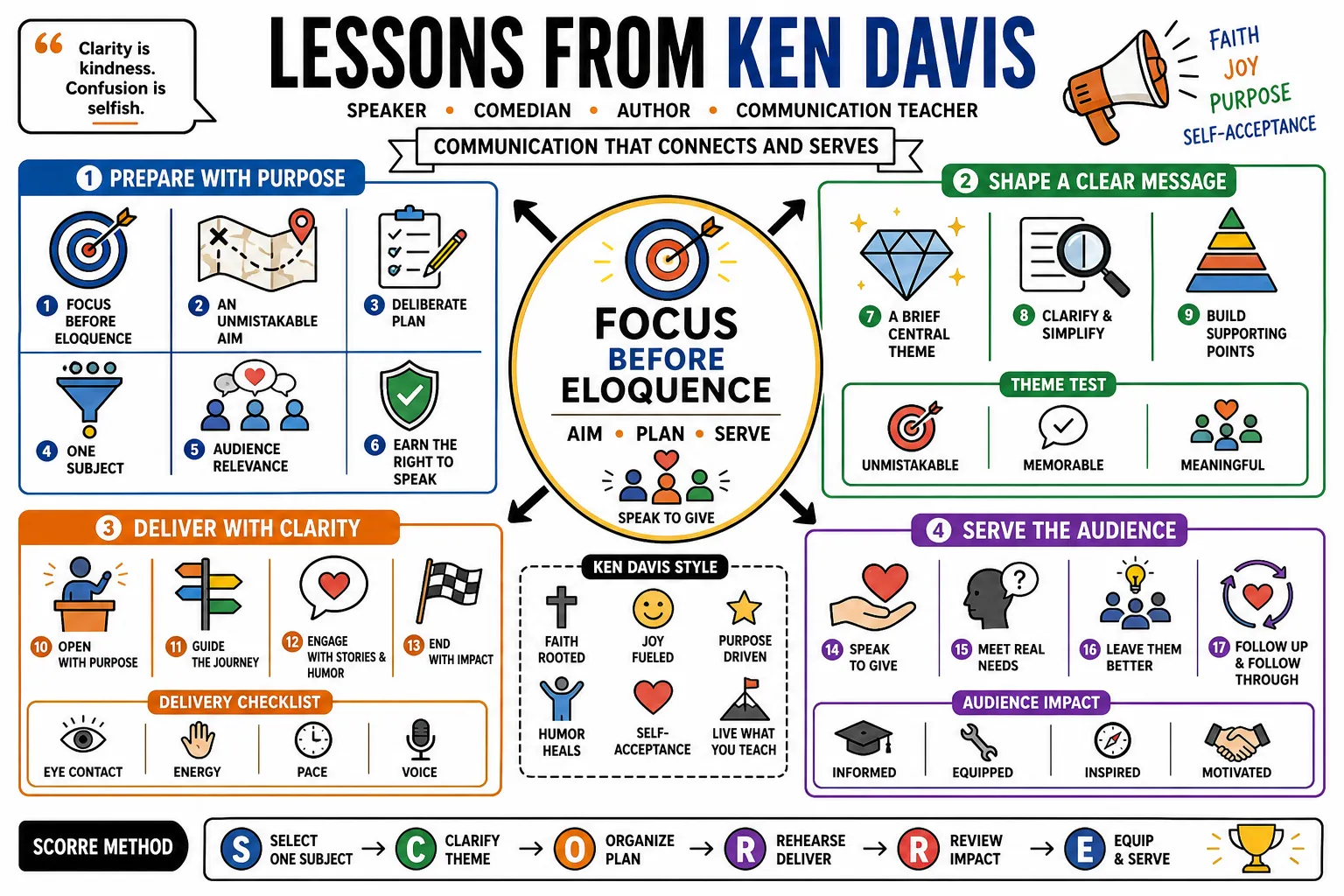
Focused Communication
- On Focus Before Eloquence: The central requirement of dynamic speaking is a clear focus; polish cannot rescue a message without an aiming point. — Reference: Secrets of Dynamic Communications — Dave Kraft's book notes
- On An Unmistakable Aim: Effective communication needs both an unmistakable destination and a deliberate plan for reaching it. — Reference: Secrets of Dynamic Communications — Dave Kraft's book notes
- On Serve the Audience: A speech is not a performance about the speaker; it should give, help, instruct, or persuade in ways that enrich the audience. — Reference: Secrets of Dynamic Communications — Dave Kraft's book notes
- On One Subject: The first preparation decision is to select one subject rather than trying to cover every possible idea. — Reference: Secrets of Dynamic Communications — Dave Kraft's book notes
- On Audience Relevance: A worthwhile subject must touch the people listening, not merely interest the speaker. — Reference: Secrets of Dynamic Communications — Dave Kraft's book notes
- On Earn the Right to Speak: Choose material within your knowledge and experience so the audience can sense that you understand and live what you teach. — Reference: Secrets of Dynamic Communications — Dave Kraft's book notes
- On A Brief Central Theme: Reduce the central theme until it is brief and unmistakably clear; unresolved complexity at the start spreads through the entire talk. — Reference: Secrets of Dynamic Communications — Dave Kraft's book notes
- On Write the Objective: A simple objective sentence forces the speaker to decide the single purpose of the presentation. — Reference: Secrets of Dynamic Communications — Dave Kraft's book notes
- On Interrogate the Proposition: Ask how or why of the proposition aloud; the answer should reveal the content the speech actually needs. — Reference: Secrets of Dynamic Communications — Dave Kraft's book notes
- On Match the Rationale: Main points should correspond to the key word, remain brief, and use parallel grammatical form. — Reference: Secrets of Dynamic Communications — Dave Kraft's book notes
- On Use Patterns for Memory: Parallel structure gives the mind patterns and hooks that improve comprehension and recall. — Reference: Secrets of Dynamic Communications — Dave Kraft's book notes
- On Resources Support the Message: Research, stories, illustrations, and humor should clarify the rationale and hold attention without becoming the point themselves. — Reference: Secrets of Dynamic Communications — Dave Kraft's book notes
- On Evaluate the Whole Structure: Check whether the subject, theme, objective, and rationale fit together as one organized and logical argument. — Reference: Secrets of Dynamic Communications — Dave Kraft's book notes
- On Open for the Listener: An opening should establish connection, stir interest, and make the audience believe the message deserves their attention. — Reference: Secrets of Dynamic Communications — Dave Kraft's book notes
- On Begin with Productive Tension: A question, problem, or story can prepare listeners to hear the presentation that follows. — Reference: Secrets of Dynamic Communications — Dave Kraft's book notes
- On Keep the Opening Purposeful: A strong opening is brief, clear, appropriate, purposeful, and centered on the audience rather than the speaker. — Reference: Secrets of Dynamic Communications — Dave Kraft's book notes
- On Prepare the Heart of the Speech: Everything before the main argument should prepare the audience to receive it rather than delay it. — Reference: Secrets of Dynamic Communications — Dave Kraft's book notes
- On Conclude with Action: A conclusion becomes memorable when it gives listeners a concrete opportunity to respond to what they have heard. — Reference: Secrets of Dynamic Communications — Dave Kraft's book notes
Joy, Identity, and Purpose
- On Notice the Humor Around You: Joy becomes easier to find when you pay attention to the absurd, funny, and wonderful details already present in ordinary life. — Reference: Focus on the Family — Finding Joy in a Crazy World transcript
- On Open Your Eyes to Joy: The world offers reasons for joy that are easy to miss unless you deliberately notice them. — Reference: Focus on the Family — Finding Joy in a Crazy World transcript
- On Accept Your Distinct Design: Self-acceptance begins by recognizing that people are not interchangeable and do not need to imitate one another. — Reference: Focus on the Family — Finding Joy in a Crazy World transcript
- On Self-Worth Without Comparison: Rejecting your own uniqueness in order to resemble someone else creates resentment rather than joy. — Reference: Focus on the Family — Finding Joy in a Crazy World transcript
- On Limits Can Reveal a Different Gift: An inability to excel in one domain does not erase worth; it can redirect attention toward an ability that serves a different purpose. — Reference: Focus on the Family — Finding Joy in a Crazy World transcript
- On Find the Work Only You Can Do: A distinct combination of abilities points toward work that no one else can perform in quite the same way. — Reference: Focus on the Family — Finding Joy in a Crazy World transcript
- On Pursue Purpose Actively: Purpose is not merely discovered through reflection; once you see a plausible direction, act on it. — Reference: Focus on the Family — Finding Joy in a Crazy World transcript
- On Nothing Worth Having Is Easy: Joy, attention, and self-acceptance require effort; their difficulty does not make them less worthwhile. — Reference: Focus on the Family — Finding Joy in a Crazy World transcript
- On Love Is Not Performance-Based: External applause and public embarrassment do not change a person's underlying worth. — Reference: Focus on the Family — Finding Joy in a Crazy World transcript
- On Achievement Cannot Supply Lasting Joy: Travel, physical transformation, and possessions may change circumstances without producing the deeper joy a person wants. — Reference: Focus on the Family — Finding Joy in a Crazy World transcript
- On Parental Love Clarifies Sacrifice: The intensity of a parent's love can make abstract ideas about care, sacrifice, and grace emotionally concrete. — Reference: Focus on the Family — Finding Joy in a Crazy World transcript
- On Humor and Truth Can Reinforce Each Other: Humor can lower defenses and carry serious ideas about identity, faith, and purpose without making those ideas trivial. — Reference: Focus on the Family — Finding Joy in a Crazy World transcript