Hollywood super-agent and co-founder of Creative Artists Agency (CAA), Michael Ovitz, is a figure of immense influence and controversy. His career has been marked by groundbreaking strategies, tough negotiations, and a relentless drive for success.
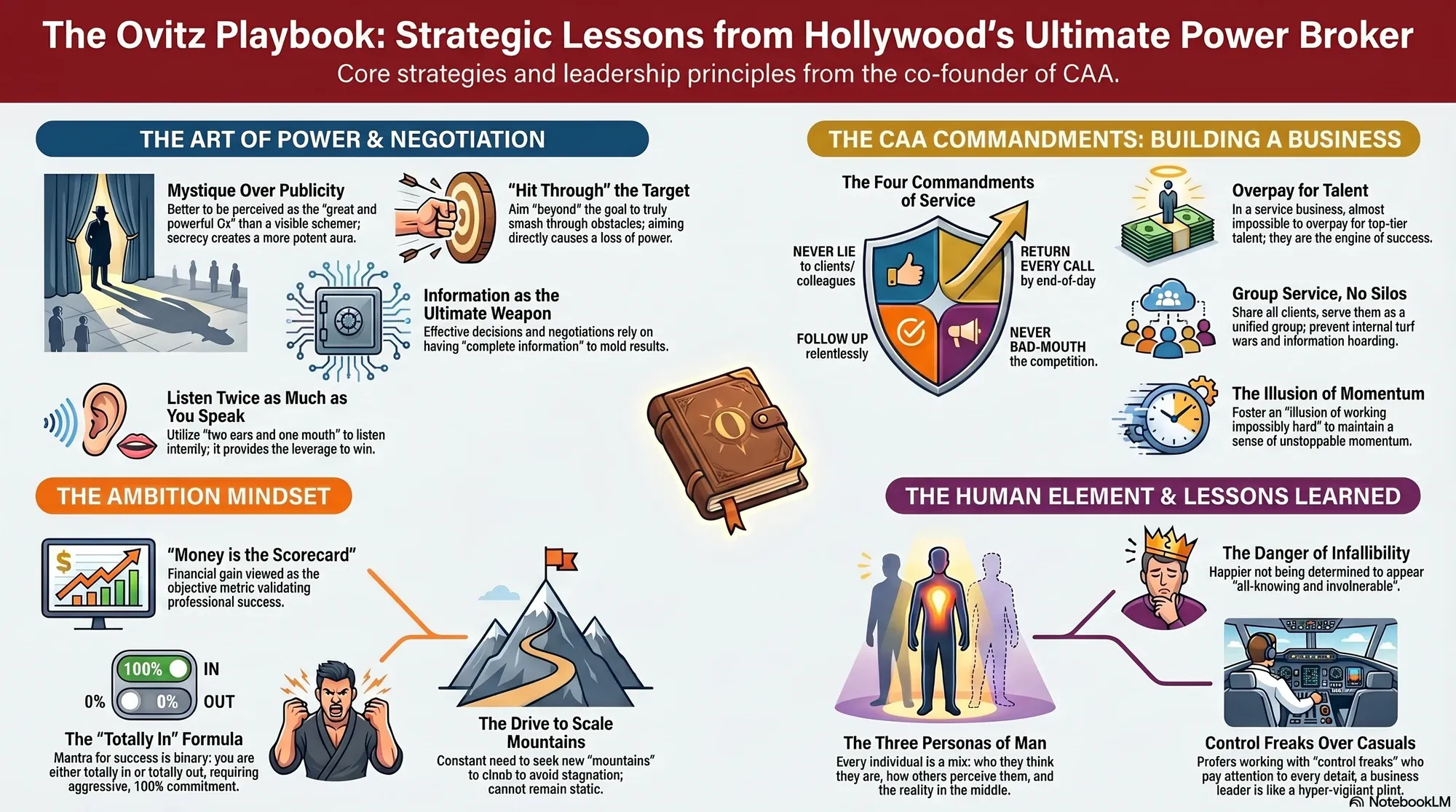
Strategy, Negotiation, and Foresight
- On Start with the Desired Endpoint: Before a complex negotiation, define the outcome you want and work backward from it instead of treating each exchange as an isolated contest. — Reference: Christopher Ming — Notes from Who Is Michael Ovitz?
- On Examine the Problem from Every Angle: A preferred counterparty becomes clearer after the problem has been considered from every relevant angle. — Reference: Christopher Ming — Notes from Who Is Michael Ovitz?
- On Make Tomorrows: Strong agents do more than react to offers and ultimatums; they create a deliberate path for the client before the next crisis arrives. — Reference: Christopher Ming — Notes from Who Is Michael Ovitz?
- On Understand the Person: Negotiation improves when understanding what motivates people becomes a sustained discipline rather than a last-minute tactic. — Reference: Christopher Ming — Notes from Who Is Michael Ovitz?
- On Build an Information Advantage: Representing decision-makers across an industry can reveal the whole chessboard, allowing an organization to spot likely moves before they become public. — Reference: Christopher Ming — Notes from Who Is Michael Ovitz?
- On Keep Power in Perspective: Power is temporary, so operating as if it were permanent is a strategic and personal mistake. — Reference: The Knowledge Project — Michael Ovitz: The Psychology of Power
Building CAA and Shaping Culture
- On Know the Capital of a Service Business: In an advisory business, time and expertise are the scarce capital; spending them well is central to the model. — Reference: Christopher Ming — Notes from Who Is Michael Ovitz?
- On Create Useful Visibility: Early-career opportunity can come from placing yourself where important work is visible and then proving useful when it appears. — Reference: Christopher Ming — Notes from Who Is Michael Ovitz?
- On Take the Unclaimed Work: Leadership often starts when someone notices that necessary administrative work has no owner and keeps moving the checklist forward. — Reference: Christopher Ming — Notes from Who Is Michael Ovitz?
- On Commit Before Conditions Are Comfortable: CAA's founders secured their first office by putting their homes behind the business, converting conviction into a concrete operating base. — Reference: Christopher Ming — Notes from Who Is Michael Ovitz?
- On Culture Is a Million Dots: Organizational culture emerges from countless small choices that only form a coherent picture when viewed together. — Reference: Christopher Ming — Notes from Who Is Michael Ovitz?
- On Make Hiring a Shared Commitment: Having the whole company participate in interviews can create broader buy-in for each person who joins. — Reference: Christopher Ming — Notes from Who Is Michael Ovitz?
- On Design for Team Reliability: A team's strength depends on the reliability of adjacent colleagues, so cooperation must be designed into how the group works. — Reference: Christopher Ming — Notes from Who Is Michael Ovitz?
- On Raise the Standard: Mediocrity becomes contagious when leaders tolerate it; maintaining standards requires addressing it directly. — Reference: The Knowledge Project — Michael Ovitz: The Psychology of Power
Execution, Momentum, and Operating Discipline
- On Protect Momentum: Momentum is built through sustained hard work, deep knowledge of the field, awareness of adjacent domains, and a clear view of competitors. — Reference: The Knowledge Project — Michael Ovitz: The Psychology of Power
- On Explain the Business Quickly: If the purpose of a business cannot be explained clearly in about twenty seconds, the underlying proposition probably needs more work. — Reference: The Knowledge Project — Michael Ovitz: The Psychology of Power
- On Prioritize Communication: A deliberate callback system can protect attention while ensuring that urgent questions and important relationships receive timely responses. — Reference: Christopher Ming — Notes from Who Is Michael Ovitz?
- On Delegate Relationships Gradually: Passing work to younger colleagues is safer when responsibility shifts through repeated supported interactions rather than one abrupt handoff. — Reference: Christopher Ming — Notes from Who Is Michael Ovitz?
- On Let Persistence Compound: Ovitz called Mort Janklow at the same time every week for a year before receiving an opportunity, showing how disciplined follow-up can build credibility. — Reference: Christopher Ming — Notes from Who Is Michael Ovitz?
- On Match Effort to What Matters: Looking back, Ovitz concluded that working ten percent less would not have reduced his professional success and would have returned meaningful time to his life. — Reference: Christopher Ming — Notes from Who Is Michael Ovitz?
Reputation, Competition, and Judgment
- On Do Not Optimize for Popularity: Winning in a competitive business may require accepting that sound decisions will not always make the decision-maker popular. — Reference: The Knowledge Project — Michael Ovitz: The Psychology of Power
- On Distrust Both Praise and Attack: Public praise and criticism are unstable signals; neither should become the foundation of self-assessment. — Reference: The Knowledge Project — Michael Ovitz: The Psychology of Power
- On Tell the Truth Directly: Truth delivered without hesitation builds a more durable operating environment than strategic ambiguity. — Reference: The Knowledge Project — Michael Ovitz: The Psychology of Power
- On Respond to Challenges: When someone confronts you, silence can be interpreted as permission; a measured response establishes a boundary. — Reference: The Knowledge Project — Michael Ovitz: The Psychology of Power
- On Judge Character in Absence: How someone discusses people who are not present is evidence of how that person will discuss everyone else later. — Reference: The Knowledge Project — Michael Ovitz: The Psychology of Power
Learning, Time, and Self-Awareness
- On Read Deeply and Widely: Remain deeply read in your own field while reading broadly outside it; context and cross-domain knowledge improve judgment. — Reference: The Knowledge Project — Michael Ovitz: The Psychology of Power
- On Learn from Other People's Mistakes: Other people's failures are an inexpensive source of operating knowledge when studied before making the same decisions yourself. — Reference: The Knowledge Project — Michael Ovitz: The Psychology of Power
- On Watch for Self-Deception: Ego makes self-deception easier, so leaders need practices that keep their own reputation from becoming their reality. — Reference: The Knowledge Project — Michael Ovitz: The Psychology of Power
- On Treat Time as the Constraint: Time is the resource that runs out fastest, making its allocation more consequential than many financial tradeoffs. — Reference: The Knowledge Project — Michael Ovitz: The Psychology of Power
- On Choose Honesty More Often: People can tolerate direct honesty better than leaders often assume. — Reference: The Knowledge Project — Michael Ovitz: The Psychology of Power