On Decision and Action
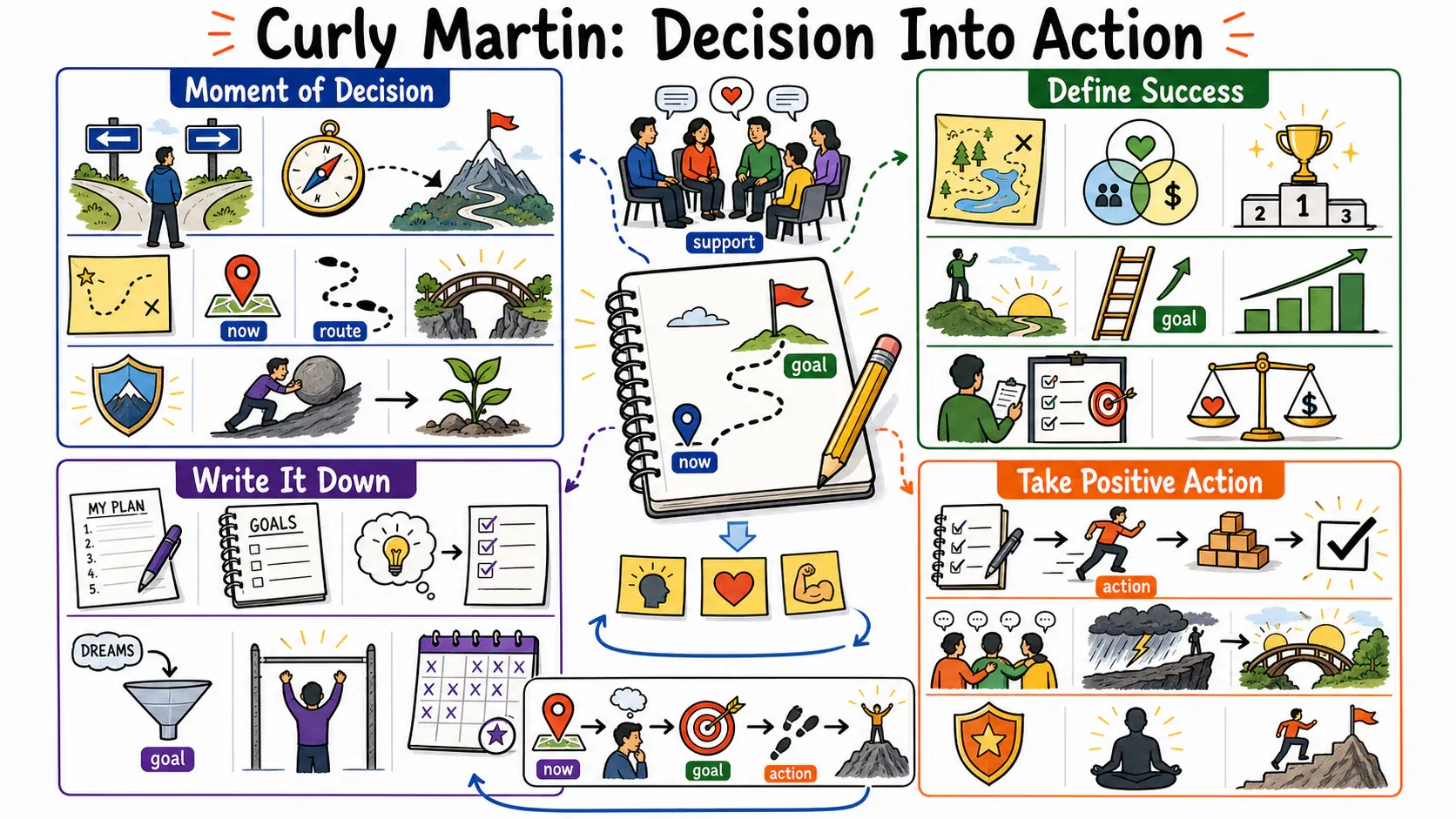
- Define the Life You Want: Martin invites readers to define success on their own terms rather than accept the life they were given. — The Personal Success Handbook.
- Pair Your Definition with Action: Her personal-success guide asks readers to define what success means to them and act on that definition. — The Personal Success Handbook.
- Use Support for Self-Analysis: Martin warns that examining your own situation without support can be discouraging; coaching is one option, not a guaranteed fix. — The Personal Success Handbook.
- Start Where You Are: Begin a personal-success plan by assessing your actual starting point. — The Personal Success Handbook.
- Name the Destination: Choose a defined destination so you can judge whether your actions are taking you toward it. — The Personal Success Handbook.
- Connect Position, Goal, and Action: Martin frames self-coaching around three questions: where you are, where you want to go, and what you will do to get there. — The Personal Success Handbook.
- Write the Challenge Down: In her business-coaching guide, Martin advises putting a suspected challenge in simple written words before trying to solve it. — The Business Coaching Handbook.
- Coaching Requires Action: Martin says her guidance can help readers coach themselves, but only if they take positive action. — The Business Coaching Handbook.
- Capture Ideas in a Notebook: Keep brief notes when ideas arise, then return to develop them into actions. — The Personal Success Handbook.
On Success and Goals
- Define Success for Yourself: Martin's publisher describes her book as helping readers decide what success means across different parts of life. — Crown House — The Personal Success Handbook.
- Turn Wishes into Goals and Action: Martin describes a progression from a persistent wish to a chosen goal and then to action; a dream alone is not the plan. — The Personal Success Handbook.
- Use Excellence as a Case-Study Goal: A photographer in Martin's goal-setting case study seeks job security by developing his craft; this is a character's example, not a verified universal rule. — The Personal Success Handbook.
- Coaching as a Set of Tools: Martin presents life coaching as tools for reflection, goal-setting and action, rather than a promise of joy or wealth. — Crown House — The Personal Success Handbook.
- Coach Beyond Sport: Martin draws an analogy to athletic coaching to argue that people outside sport can also benefit from encouragement and goals; this is her belief, not a clinical result. — Curly Martin — About Curly.
On Overcoming Adversity
- Adversity as Personal Catalyst: Martin describes her cancer diagnosis as a catalyst for changing the direction of her life; this is her interpretation of her own experience. — Curly Martin — About Curly.
- Use Humor in the Story: Martin deliberately tells her cancer-to-coaching story with humor; she does not present humor as a cancer treatment. — Curly Martin — About Curly.
- Cancer Experiences Differ: Martin offers coaching tailored to a survivor's energy and circumstances, rather than assuming everyone follows her path. — Curly Martin — About Curly.
- Support a Life Beyond Treatment: Her recovery-coaching program focuses on personal goals, confidence and returning to activities after treatment; it is not a substitute for medical care. — Curly Martin — About Curly.
- Appreciate Life Before a Crisis: In her signed guest essay, Martin says one need not wait for a crisis to appreciate ordinary life. — Curly Martin — Celebrate Life.
- Celebrate What Is Available: Martin urges readers to value the parts of life they can enjoy, even if not every item on her list is available to them. — Curly Martin — Celebrate Life.
- Describe Love as a Personal Practice: Martin says she practiced directing loving thoughts toward her body during her years after cancer treatment; this is a personal belief, not evidence that the practice cured cancer. — Curly Martin — Cancer Free for 20 Years.
- Translate Spiritual Language Personally: Martin says she reads spiritually framed books selectively, substituting “Universe” for “God” where that better fits her worldview. — Curly Martin — Cancer Free for 20 Years.
- Report Her Later Life: Martin describes building a happy and active life after conventional cancer treatment; this is an autobiographical report, not a prediction for others. — Curly Martin — Cancer Free for 20 Years.
On Business and Coaching
- A Business Reflects Its Owner: Martin uses a two-owner case study to argue that an owner's values and habits become visible in a business's culture and public presentation. — The Business Coaching Handbook — Now Review Now.
- Notice Your Operating Habits: Her business-coaching chapter warns that disorganization in the owner can spill into the enterprise; she frames this as practical coaching advice. — The Business Coaching Handbook — Now Review Now.
- Assess Before Growing: The Business Coaching Handbook asks owners to assess where their enterprise stands before choosing actions for growth. — Crown House — The Business Coaching Handbook.
- Use Client Commitment: Martin describes life coaching as helping clients make commitments toward measurable, client-chosen results. — The Life Coaching Handbook — Preview.
- Coach Across Life Areas: Martin presents life coaching as a holistic process that may touch work, relationships and other areas rather than a single isolated target. — The Life Coaching Handbook — Preview.
- Check Life-Area Balance: Her introduction frames coaching as a way to notice how goals across life areas interact; it does not establish that every imbalance causes harm. — The Life Coaching Handbook — Preview.
- Use the I CAN DO Model: A former trainee describes Martin and Achievement Specialists teaching an I CAN DO model for structuring goal-focused coaching; the exact six-step wording in the old profile remains unverified in Martin's accessible preview. — HeartCoach — Martin's I CAN DO Model.
- Distinguish Coaching from Therapy: Martin's book explicitly separates coaching from counselling and therapy; coaching is not a substitute for either. — The Life Coaching Handbook — Preview.
- Learn Communication and Reframing: The Life Coaching Handbook teaches communication, rapport and reframing as coaching skills; no specific effectiveness claim is made. — The Life Coaching Handbook — Preview.
- Study Meta- and Milton-Language Models: Martin's book includes Meta-language and Milton-language chapters as part of its NLP-based coaching curriculum; this describes its content, not proven efficacy. — Crown House — The Life Coaching Handbook.
On Life and Well-being
- Notice Ordinary Scents: Martin includes familiar smells such as flowers, baking and coffee among the everyday experiences she invites readers to appreciate. — Curly Martin — Celebrate Life.
- Enjoy Familiar Tastes: Her celebration list uses food and drink as examples of ordinary pleasures worth noticing. — Curly Martin — Celebrate Life.
- Value Everyday Freedom: Martin asks readers to appreciate the freedom to choose and act, while recognizing that not everyone has that freedom. — Curly Martin — Celebrate Life.
- Make Appreciation a Practice: Her signed essay closes by urging people to celebrate being alive and able to notice life's ordinary pleasures. — Curly Martin — Celebrate Life.
- Listen to Everyday Sounds: Martin points to music, wind, waves and loved ones' voices as sounds to appreciate. — Curly Martin — Celebrate Life.
- Value the Sense of Touch: Martin includes touch among the ordinary senses she asks readers to appreciate. — Curly Martin — Celebrate Life.
- Notice Limiting Beliefs: Martin's self-coaching materials ask readers to examine beliefs about health; this describes her reflection exercise, not a proven treatment. — Curly Martin — Health Bonus Download.
- Interrupt Negative Self-Talk: Her five-day self-coaching outline asks readers to notice negative statements and try replacing them with positive ones; no clinical outcome is claimed. — Curly Martin — Health Bonus Download.
Sources:
- Curly Martin — About the Author: Official biography and first-person account of her coaching and cancer-recovery writing. — Curly Martin — About Curly.
Learn more:
- The Personal Success Handbook — Publisher Preview: Crown House Publishing's original 17-page preview, including Martin's introduction and goal-setting chapter. — Crown House — Personal Success Preview.
- 10 Reasons We Should All Celebrate Life: Curly Martin's signed guest essay on ordinary life appreciation. — Curly Martin — Celebrate Life.
- Cancer Free for 20 Years — First-Person Essay: Martin's contributed account of her cancer-to-coaching journey and personal reading practices. — Curly Martin — Cancer Free for 20 Years.
- The Business Coaching Handbook — Chapter One: A licensed excerpt of Martin's original business-owner case study and PACE exercise. — The Business Coaching Handbook — Chapter One.
- The Life Coaching Handbook — Publisher Overview: Crown House Publishing's official description and contents of Martin's life-coaching book. — Crown House — Life Coaching Handbook.