Rob Walker is a journalist, author, and educator whose work examines consumer culture, creativity, observation, and attention. He writes the Branded column for Fast Company and teaches in the Products of Design MFA and Design Research Summer Intensive programs at the School of Visual Arts. His books and newsletter encourage people to engage more consciously with everyday life.
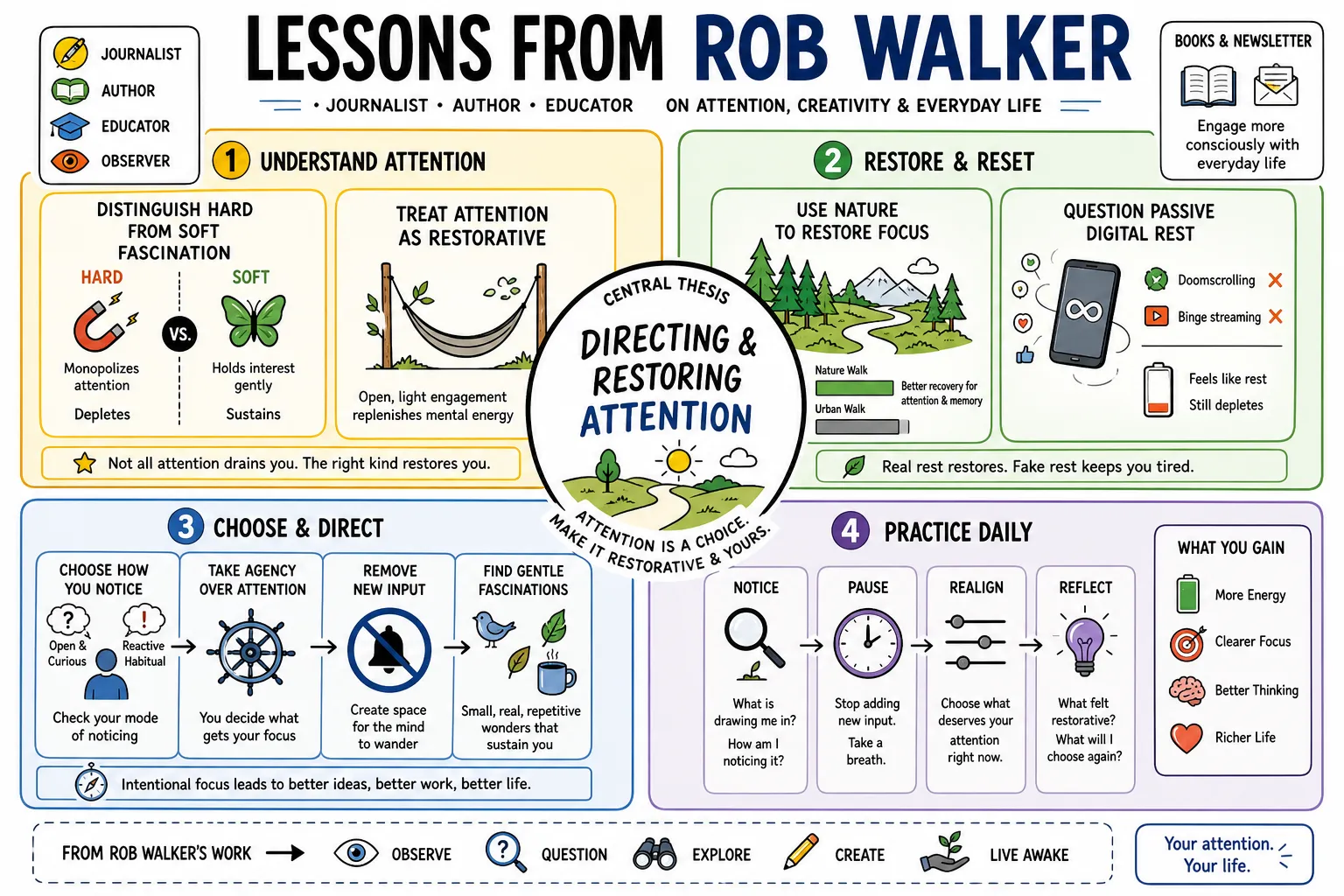
Directing and Restoring Attention
- On Distinguish Hard from Soft Fascination: Some stimuli monopolize attention and leave it depleted, while gentler fascinations hold interest without consuming all available mental space. — Reference: The Art of Noticing — Give It A Rest
- On Treat Attention as Restorative: Attention can be restful when it is open and lightly engaged rather than captured by constant stimulation. — Reference: The Art of Noticing — Give It A Rest
- On Use Nature to Restore Focus: A walk through nature can restore attention and memory more effectively than a walk through a hectic urban setting. — Reference: The Art of Noticing — Give It A Rest
- On Question Passive Digital Rest: Doomscrolling and streaming may feel like rest while continuing to fatigue and deplete attention. — Reference: The Art of Noticing — Give It A Rest
- On Choose How You Notice: Pay attention not only to what attracts you but also to whether your way of noticing is open and curious or merely reactive. — Reference: The Art of Noticing — Give It A Rest
- On Take Agency Over Attention: Create deliberate control over focus instead of allowing external systems to decide what receives it. — Reference: The Art of Noticing — Give It A Rest
- On Remove New Input: Brief periods without new input can let the mind wander and reveal where attention naturally wants to go. — Reference: The Art of Noticing — Give It A Rest
- On Find Gentle Fascination Anywhere: Restorative attention need not depend on wilderness; people can learn to notice gentle fascinations in ordinary settings. — Reference: The Art of Noticing — Give It A Rest
- On Pair Diagnosis with Tactics: People already understand the attention economy; what they need are practical tactics that provide relief from it. — Reference: Curated Questions — Questions as Relief
Practicing Everyday Noticing
- On Turn the Familiar into Something to Savor: A focused noticing theme can convert something everyday and taken for granted into something worth appreciating. — Reference: The Art of Noticing — Savor of the Month
- On Document What You Notice: Photos, drawings, and written observations are all valid ways to deepen and share attention. — Reference: The Art of Noticing — Savor of the Month
- On Use Exercises, Not Only Ideas: A guide to attention becomes more useful when it offers practices that can be revisited over time rather than only arguments to remember. — Reference: Rob Walker — The Art of Noticing
- On Change How You Experience a Place: Simple observation exercises can alter how a familiar city or museum is experienced. — Reference: Rob Walker — The Art of Noticing
- On Notice the Overlooked Surface: Creativity often begins with asking what has been in plain sight without ever registering consciously. — Reference: Rob Walker — The Art of Noticing
- On Stay Open to Surprise: A noticing mindset increases the chance of encountering unexpected material that becomes useful inspiration later. — Reference: Rob Walker — The Art of Noticing
Consumer Culture and Identity
- On See Consumers as Participants: Consumers do not merely receive brand meaning; they actively help create and circulate it. — Reference: Rob Walker — Buying In
- On Recognize Pervasive Persuasion: Marketing gains power when its presence is so pervasive that people stop noticing how it shapes them. — Reference: Rob Walker — Buying In
- On Treat Brand Meaning as Interactive: The relationship between a brand and its audience is interactive, with both sides influencing what the brand comes to represent. — Reference: Rob Walker — Buying In
- On Examine Identity Through Purchases: Material choices can project and reinforce identity even among people who believe they are immune to branding. — Reference: Rob Walker — Buying In
- On Do Not Substitute Symbols for Belonging: A symbolic purchase cannot replace the work of developing an identity or participating in a real community. — Reference: Rob Walker — Buying In
- On Find the Narrative in Products: Products become powerful when people embed them in personal narratives about values, aspiration, and belonging. — Reference: Rob Walker — Buying In
Brand Authenticity in the AI Era
- On Read the Public Mood: A small complaint about AI-like language can reveal a broader shift in consumer sentiment even when the specific accusation is uncertain. — Reference: Fast Company — The AI Backlash Is a Danger for Every Brand
- On Expect AI Skepticism to Spread: Skepticism about AI can affect any brand whose use of the technology appears careless or dubious, not only AI companies themselves. — Reference: Fast Company — The AI Backlash Is a Danger for Every Brand
- On Protect Core Identity Messaging: Brands invite distrust when audiences believe their most important identity language has been outsourced to an algorithm. — Reference: Fast Company — The AI Backlash Is a Danger for Every Brand
- On Treat Inauthenticity as Multiplicative: AI can intensify an existing authenticity problem rather than merely adding a new technical concern. — Reference: Fast Company — The AI Backlash Is a Danger for Every Brand
- On Do Not Betray Brand Roots: Technology-led creative work can backfire when it appears to contradict the values and communities a brand historically represented. — Reference: Fast Company — The AI Backlash Is a Danger for Every Brand
Finding Meaning in Ordinary Brands
- On Look for Soft Power in Everyday Culture: Enthusiastic visitor stories about ordinary products can create positive cultural influence that formal campaigns struggle to manufacture. — Reference: Fast Company — Waffle House Is Winning the World Cup
- On Let Routine Experiences Become Attractions: Familiar chains can become part of the sightseeing experience when outsiders encounter them with fresh eyes. — Reference: Fast Company — Waffle House Is Winning the World Cup
- On Flip the Expected Travel Script: Content becomes compelling when it treats ordinary chains as landmarks instead of repeating the familiar focus on luxury attractions. — Reference: Fast Company — Waffle House Is Winning the World Cup
- On Make the Everyday Legible: An ordinary culture becomes vivid when people frame its familiar scale, convenience, and rituals as a recognizable spectacle. — Reference: Fast Company — Waffle House Is Winning the World Cup